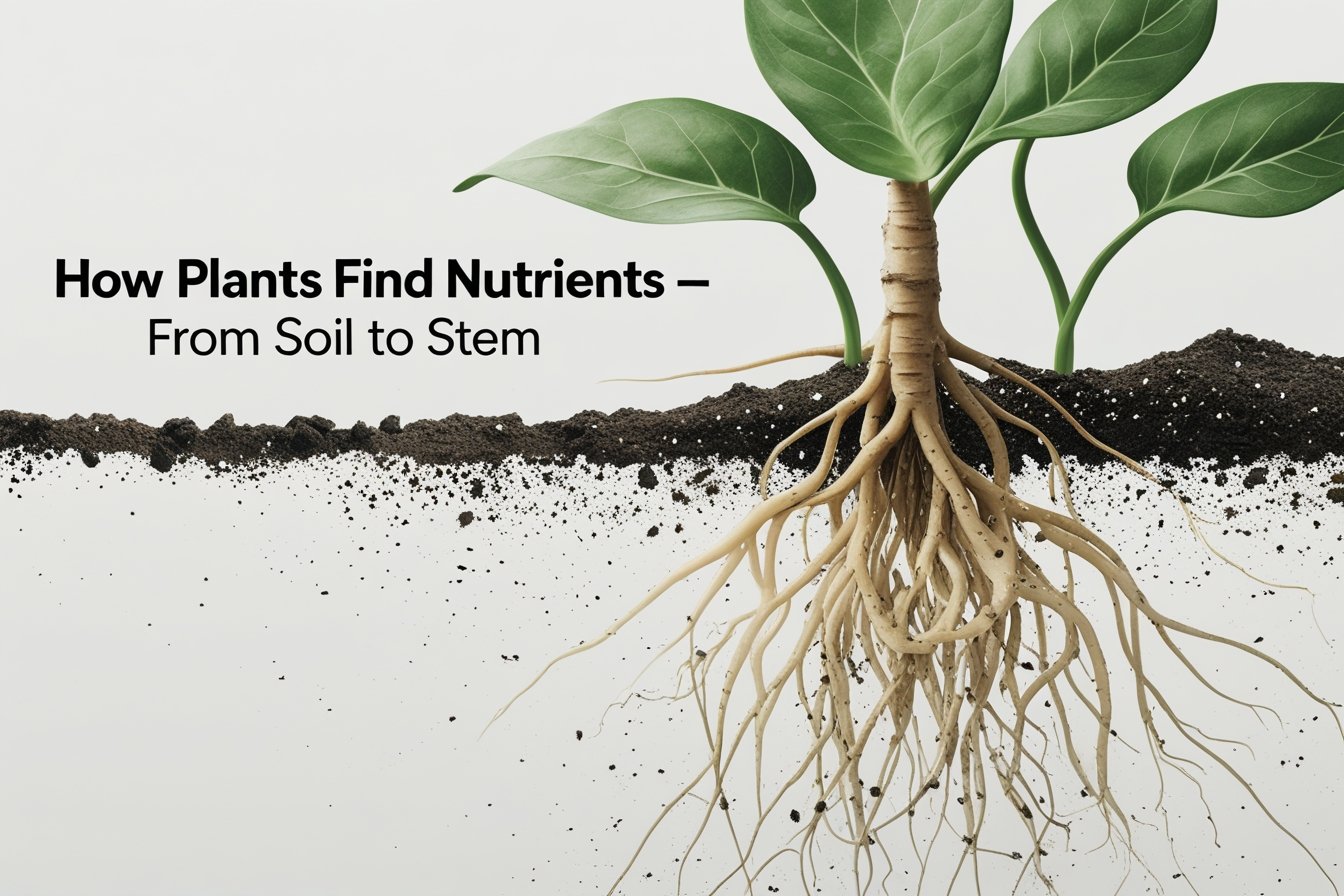
Ever wondered how a towering oak tree manages to extract exactly what it needs from seemingly lifeless dirt? The fascinating world of plant nutrient acquisition reveals nature’s most sophisticated treasure-hunting system, where roots act as underground detectives, constantly searching for life-sustaining minerals hidden in the soil matrix.
The Underground Intelligence Network:
Plants have evolved an incredible underground intelligence system that would make any modern surveillance network jealous. The root system serves as the primary command center for nutrient detection and absorption, extending far beyond what meets the eye above ground.
The Architecture of Absorption:
- Primary roots penetrate deep into soil layers, accessing nutrients unavailable to shallow-rooted competitors
- Secondary root networks spread horizontally, creating an extensive mining operation
- Root hair zones multiply surface area by up to 1000%, maximizing contact with soil particles
- Mycorrhizal partnerships extend the root’s reach through fungal networks, accessing nutrients from distant soil regions
The genius of this system lies in its adaptability. When essential nutrients become scarce in one soil zone, roots actively redirect their growth toward nutrient-rich areas, demonstrating a level of environmental intelligence that scientists are only beginning to understand.
Chemical Communication in the Root Zone:
Plants don’t just passively absorb whatever happens to be nearby. They actively engage in sophisticated chemical signaling with their environment. Root cells release specific enzymes and organic acids that break down complex soil compounds, making bound nutrients available for uptake.
This process, known as rhizosphere modification, allows plants to essentially cook their own meals. When phosphorus is locked in insoluble compounds, roots secrete phosphatase enzymes. When iron is unavailable due to high pH, they release acidifying compounds that make this crucial micronutrient accessible.
The soil-root interface becomes a dynamic chemical laboratory where plants continuously test, modify, and optimize their nutritional environment.
How Nutrients Cross the Root Barrier:
The journey from soil to stem involves one of nature’s most elegant molecular sorting systems. Plant cell membranes act as highly selective gatekeepers, allowing beneficial nutrients to pass while blocking harmful substances.
Active vs. Passive Transport Mechanisms:
Nutrient uptake occurs through two primary pathways, each serving different nutritional needs:
Passive Transport:
- Water-dissolved nutrients move along concentration gradients
- Mass flow carries nutrients directly to root surfaces
- Diffusion allows small molecules to pass through membrane pores
- Energy-free process ideal for abundant nutrients
Active Transport:
- Plants invest metabolic energy to capture scarce nutrients
- Carrier proteins bind specific nutrient molecules
- Transport occurs against concentration gradients
- Essential for acquiring trace elements in limited supply
This dual-system approach ensures plants can capitalize on nutrient abundance while still securing essential elements that exist in tiny concentrations.
The Selectivity Challenge:
Not all dissolved substances are welcome guests. Plants have evolved sophisticated molecular discrimination systems that distinguish between beneficial nutrients and potentially toxic compounds. Transport proteins act like highly trained security personnel, checking molecular passports before allowing entry.
The Casparian strip, a waterproof barrier in root tissue, forces all nutrients through this selective screening process, preventing unwanted substances from sneaking into the plant’s vascular system through gaps between cells.
Nutrient Highway Systems:
Once nutrients pass the root checkpoint, they embark on a remarkable journey through the plant’s internal transport network. This biological highway system rivals any human-engineered infrastructure in its efficiency and sophistication.
Xylem: The Upward Expressway:
The xylem tissue serves as the plant’s primary nutrient superhighway, moving water and dissolved minerals from roots to the furthest leaf tips. This transport system operates on several fascinating principles:
- Transpiration pull creates negative pressure that draws nutrients upward
- Root pressure provides additional lifting force from below
- Cohesion-tension theory explains how water molecules stick together during transport
- Vessel elements form continuous tubes that minimize transport resistance
What makes this system truly remarkable is its energy efficiency. Unlike animal circulatory systems that require constant heart pumping, plant transport operates primarily on physical forces, requiring minimal metabolic energy.
Phloem: The Distribution Network:
While xylem handles upward transport, the phloem tissue manages the complex task of distributing processed nutrients throughout the plant body. This system moves:
Organic Nutrients:
- Photosynthetic sugars from leaves to growing tissues
- Amino acids from protein synthesis sites to areas of need
- Hormones that coordinate growth and development
- Secondary metabolites for defense and specialized functions
The phloem transport system demonstrates remarkable intelligence, automatically redirecting nutrient flow based on seasonal demands, growth patterns, and environmental stresses.
The Precision Targeting System:
The final stage of nutrient transport involves precise delivery to individual cells throughout the plant body. This process requires sophisticated cellular machinery that rivals the most advanced pharmaceutical delivery systems.
Symplastic vs. Apoplastic Pathways:
Plants utilize two distinct routes for moving nutrients within tissues:
Symplastic Transport:
- Nutrients move through plasmodesmata (cellular bridges)
- Allows direct cell-to-cell communication
- Provides tight control over nutrient distribution
- Ideal for sensitive regulatory molecules
Apoplastic Transport:
- Nutrients travel through cell walls and intercellular spaces
- Faster transport for bulk nutrient movement
- Less cellular control but higher capacity
- Primary route for water and mineral transport
This dual-pathway system provides both speed and precision, ensuring nutrients reach their destinations efficiently while maintaining cellular control over distribution.
Cellular Uptake Mechanisms:
Individual plant cells employ specialized uptake systems to capture nutrients from the transport stream:
- Channel proteins allow the rapid passage of specific ions
- Carrier proteins bind and transport larger nutrient molecules
- Endocytosis captures complex nutrient packages
- Vesicle transport moves nutrients within cellular compartments
The sophistication of these cellular transport mechanisms ensures that each cell receives exactly the nutrients it needs for optimal function.
Adaptive Nutrient Strategies:
Plants demonstrate remarkable environmental intelligence in their nutrient acquisition strategies, constantly adjusting their approach based on soil conditions, weather patterns, and seasonal changes.
Seasonal Optimization Patterns:
Nutrient uptake varies dramatically throughout the growing season, reflecting plants’ sophisticated understanding of their environment:
Spring Activation:
- Rapid root growth to capture early-season nutrients
- Increased nitrogen uptake to support new leaf production
- Enhanced phosphorus absorption for energy-intensive growth
- Strategic potassium accumulation for cellular processes
Summer Maintenance:
- Steady-state nutrient flow to support photosynthesis
- Water-nutrient coupling to prevent drought stress
- Selective uptake of micronutrients for specialized functions
- Root system expansion into deeper soil layers
Fall Preparation:
- Nutrient remobilization from leaves to storage organs
- Reduced uptake as growth slows
- Storage compound synthesis for winter survival
- Root preparation for dormancy period
Stress Response Adaptations:
When environmental conditions challenge normal nutrient availability, plants activate sophisticated response mechanisms:
Drought Adaptations:
- Root hair elongation to maximize soil contact
- Osmotic adjustment to maintain nutrient uptake under water stress
- Symbiotic relationships with drought-tolerant soil microorganisms
- Leaf modifications to reduce water loss while maintaining nutrient transport
Nutrient Deficiency Responses:
- Root architecture changes to explore new soil zones
- Enzyme production to release bound nutrients
- Symbiotic partnerships with nitrogen-fixing bacteria or mycorrhizal fungi
- Metabolic adjustments to function with limited nutrients
The Partnership Network:
Perhaps the most fascinating aspect of plant nutrient acquisition involves the complex partnerships plants form with soil microorganisms. These symbiotic relationships expand the plant’s nutritional capabilities far beyond what roots alone could achieve.
Mycorrhizal Partnerships:
Mycorrhizal fungi form intimate partnerships with plant roots, creating what scientists call the “wood wide web” – an underground network that revolutionizes nutrient exchange:
- Arbuscular mycorrhizae penetrate root cells, directly exchanging nutrients for carbohydrates
- Ectomycorrhizae form external root sheaths, dramatically expanding the root’s surface area
- Fungal networks connect multiple plants, allowing nutrient sharing across species
- Phosphorus mobilization by fungi makes this often-limiting nutrient readily available
This partnership represents one of evolution’s most successful collaborations, with over 90% of plant species participating in mycorrhizal relationships.
Bacterial Alliances:
Root-associated bacteria provide another layer of nutritional support:
Nitrogen-Fixing Bacteria:
- Rhizobium species form specialized root nodules in legumes
- Convert atmospheric nitrogen into plant-available forms
- Provide up to 80% of the plant’s nitrogen requirements
- Create nitrogen-rich soil environments benefiting nearby plants
Plant Growth-Promoting Rhizobacteria:
- Enhance nutrient solubility in the root zone
- Produce growth hormones that stimulate root development
- Protect against soil-borne pathogens
- Improve stress tolerance during challenging conditions
Learning from Plant Nutrient Systems:
Modern agricultural technology increasingly draws inspiration from natural plant nutrient acquisition systems, leading to innovations that improve crop production while reducing environmental impact.
Precision Agriculture Applications:
Smart farming systems now mimic plant intelligence:
- Sensor networks monitor soil nutrient levels like plant roots sense their environment
- Variable rate application delivers nutrients where and when needed, copying plant-responsive uptake
- Biological soil amendments enhance natural nutrient cycling processes
- Companion planting leverages natural plant partnerships for improved nutrition
Sustainable Fertilizer Strategies:
Understanding natural nutrient transport mechanisms has led to:
- Slow-release fertilizers that mimic natural nutrient availability patterns
- Biofertilizers containing beneficial microorganisms that enhance plant uptake
- Foliar feeding systems based on leaf nutrient absorption capabilities
- Root zone fertilization that targets the most active uptake areas
Conclusion:
The journey of nutrients from soil to stem reveals nature’s most sophisticated supply chain management system. Through intelligent root networks, selective transport mechanisms, and strategic partnerships, plants have mastered the art of extracting life from the earth. Understanding these remarkable processes not only deepens our appreciation for plant life but also guides us toward more sustainable agricultural practices that work with, rather than against, these natural systems.
FAQs:
1. How do plant roots actually find nutrients in the soil?
Plant roots use chemical sensors to detect nutrient concentrations and grow toward nutrient-rich areas through a process called chemotropism.
2. What’s the difference between how plants absorb nitrogen versus phosphorus?
Nitrogen moves easily through soil water and is absorbed passively, while phosphorus binds tightly to soil particles and requires active transport mechanisms.
3. Can plants survive without mycorrhizal fungi partnerships?
Most plants can survive but struggle significantly, as mycorrhizal partnerships increase nutrient uptake capacity by up to 1000%.
4. How fast do nutrients travel from roots to leaves?
Nutrient transport through xylem tissue can move at speeds of 1-45 meters per hour, depending on plant size and environmental conditions.
5. Do all plant parts absorb nutrients the same way?
No – roots specialize in mineral absorption, leaves can absorb some nutrients directly from the air, and stems primarily transport rather than absorb.
6. What happens when plants can’t find enough nutrients in soil?
Plants activate stress responses, including root growth modification, enzyme secretion to unlock bound nutrients, and enhanced symbiotic partnerships.
